School story: Nelson Park School’s phonics lesson pack success – ‘I’m actually learning to read now!’
Nelson Park School is a special school across two campuses in Geelong, Victoria, which provides personalised learning for students with diagnosed mild Intellectual Developmental Disorder (IDD). Educators at the school's Prep to Year 9 campus recognised that students had gaps in their phonics knowledge and sought to address these gaps using a consistent and systematic approach to phonics instruction.
Leading Teacher - Literacy, Jess Kreltszheim, discovered a mixed approach was being used across campus during dedicated literacy blocks, with a blend of different commercial phonics products resulting in inconsistent practice and gaps in students' blending and decoding skills.
Jess wanted a common routine with trackable data to improve outcomes. She hoped to find resources that allowed her colleagues to scaffold more specifically and ensure the best outcomes for students' reading, spelling and writing. She knew that predictable routines, consistent language and repeated instructional formats would provide effective accessibility support. Jess found the Literacy Hub's resources met these requirements. The Hub's 24-phase phonics progression provides teachers with an order for teaching the sounds and letters of English, moving from simple code (s-a-t-p-i-n) to complex code (ough). In addition, Phonics and morphology lesson packs aligned to the progression provide teachers with 122 comprehensive lessons, each with slides, student sheets, decodable resources and progress monitoring tools. These resources are funded by the Australian Government and freely available on the Literacy Hub website.
'We were excited to find the Literacy Hub resources met our needs.'
Leading Teacher - Literacy, Jess Kreltszheim
Getting started with Literacy Hub's phonics lesson packs
Jess and the school Literacy tutor piloted the Literacy Hub's resources with a small group of Year 1 and 2 students. After identifying students' various points of need, using either an online or paper Year 1 Phonics Check, or the Progress monitoring tool phases 1-24, teachers chose the appropriate phase and its corresponding lesson pack to start with.
Jess and the tutor saw growth in their students' ability to match graphemes with phonemes, and blend and segment CVC words orally and through writing. Progress happened more quickly than in previous years. Jess shared that previously it had been a struggle to get students past certain milestones in reading and writing; however, using the lesson packs felt like a breakthrough.
"We had students saying, 'I can't believe I'm actually learning to read now!'
This pilot group of learners, who wouldn't usually read until Year 3 or 4, were beginning to read in Year 1 and 2!"
Leading Teacher - Literacy, Jess Kreltszheim
What made implementation work?
After hearing the success of the pilot program, colleagues were keen to implement it during their dedicated literacy block. Any initial concerns about the suitability of level-appropriate material as opposed to age-appropriate material were resolved after Jess found the lesson packs were engaging for all ages. Older students did not find the program 'babyish'; because the slides feature neutral images, neutral colour palettes, consistent routines and clear spelling generalisations that appealed even to Year 9 students. The 24-phase progression worked well with the school's existing decodable readers; teachers liked that each lesson pack included a set of decodable resource sheets.
To roll out the resources across the school, Jess and her colleagues found each student's point of need using the same tools used during the pilot.
Students began at different phases on the progression and moved at different rates while still participating in a shared instructional model. Nelson Park School found this approach integral to supporting diverse needs. Teachers were given the scope to decide how long they would continue to teach each phase for.
'Our teachers have freedom to respond to student needs. If a teacher wants to reteach a phase, they can. Some teachers taught Phase 1 in seven weeks while others may teach it for the whole year.'
Leading Teacher - Literacy, Jess Kreltszheim
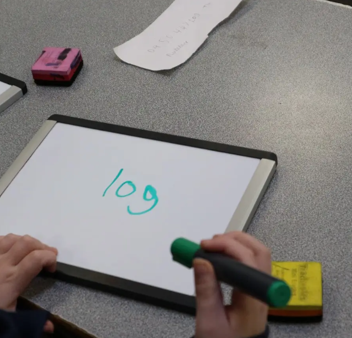
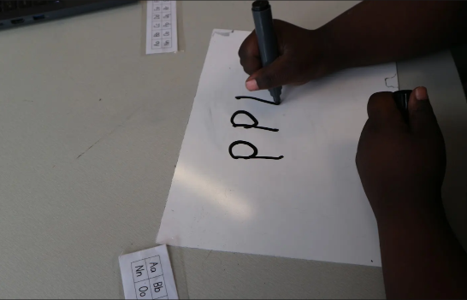
Teachers and students worked through the phonics progression for 25 minutes each day, with students using mini-whiteboards to practise and respond, ensuring a systematic, consistent and routine approach.
Seeing the impact on students
Teachers at Nelson Park School work with students across a range of ability levels in the classroom. They previously saw students become disinterested, particularly if an activity was perceived as challenging. Since working with the Literacy Hub lesson packs, teachers have seen an uplift in students' engagement and confidence levels in their classrooms.
'Literacy Hub phonics has had a positive impact on my students. The consistent routines and ongoing exposure to key concepts reinforces their understandings and supports their success.'
Classroom teacher, Jacinta Rodda
Many students are applying their phonics skills, such as blending sounds when reading decodable texts and segmenting when spelling. Understanding how to segment words has made the process of spelling more concrete.
Students enjoyed seeing their progress in reading and writing, and sharing their learnings with their classmates, educators and parents/carers.
'At the beginning of the year, one of the students was unable to demonstrate the skills at Phase 1. Now he knows and uses all the Phase 1 letters and sounds. It has been wonderful to see his confidence develop alongside his learning.'
Education support staff member, Bobby Dick
Where to next?
Jess and her colleagues are already planning how they can continue using the lesson packs. Using data from the progress monitoring tool, teachers will run two groups in the classroom – one for the main cohort and one for differentiation. Nelson Park School has already started building capacity and upskilling education support staff to run the small groups. The school has rolled out professional learning and personalised coaching from the leadership team. Education support staff are excited to run the small phonics groups, planned and monitored by teachers.
Under Jess’ leadership, colleagues will continue to explore accessibility supports to help students access phonics instruction. For example, several Nelson Park School students use Augmentative and Alternative Communication (AAC) devices. In considering this cohort, the team is working on a school-wide approach using AAC in phonics instruction, in consultation with allied health professionals.
Jess will continue evaluating the phonics program at her campus, making process improvements to ensure the best literacy outcomes for students.